

China Best Healthcare Industry Trends for Global Buyers?
China’s healthcare market is entering a more selective and technology-driven phase. For global buyers, the most valuable healthcare industry trends are not simply about lower prices. They involve verified quality, digital integration, supply resilience, and measurable clinical value.
China’s National Bureau of Statistics reported that people aged 60 and above reached 310.3 million in 2024. This represented 22.0% of the population. The same demographic shift is increasing demand for rehabilitation devices, home-care equipment, chronic-disease monitoring, and senior-friendly services. China’s National Health Commission also reported total health expenditure of approximately RMB 9.1 trillion in 2023. That figure shows the market’s scale, but it does not guarantee equal opportunities across every product category. Regional purchasing power, hospital procurement rules, and reimbursement policies remain important variables.
Digital care is expanding quickly. The World Health Organization identifies digital health, primary care, and integrated services as major priorities for stronger health systems. McKinsey’s healthcare research on China also highlights growth in specialty services, medical technology, and healthcare consumption. Buyers should examine evidence carefully. A connected device may look impressive, yet poor interoperability can create hidden costs for hospitals and distributors. I have seen product discussions focus heavily on specifications while overlooking maintenance, training, data protection, and local support.
That gap deserves attention.
The strongest suppliers combine certified manufacturing with practical market knowledge. They provide transparent test records, stable production capacity, clear labeling, and responsive after-sales service. This guide evaluates China’s leading healthcare industry trends through those buyer-focused criteria. It also recognizes an uncomfortable point: market growth alone is not proof of product reliability. Careful due diligence remains essential.
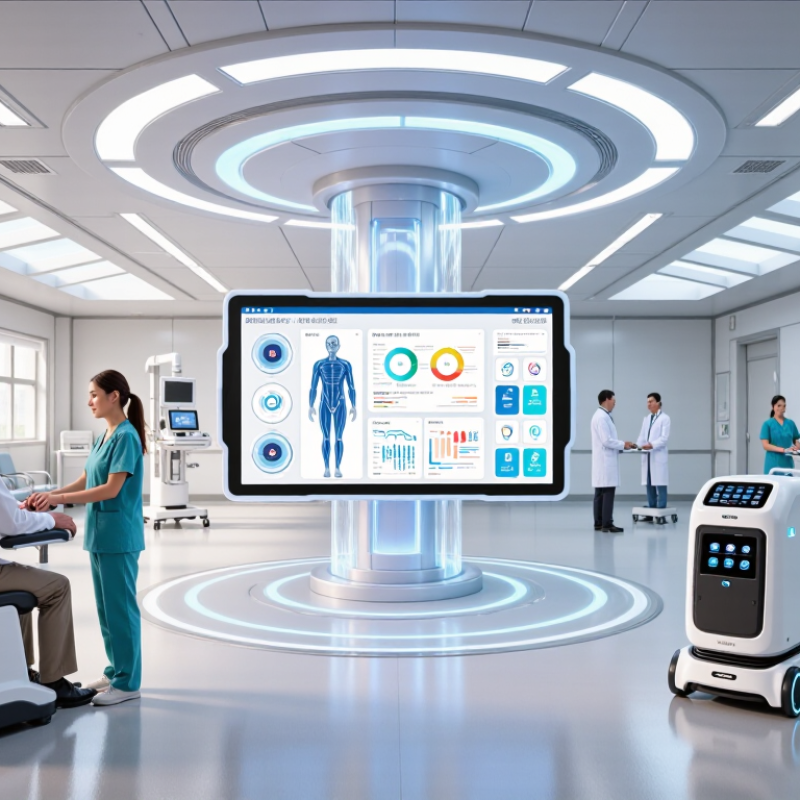
China’s Healthcare Industry: Definition, Scope, and Global Importance
China’s healthcare industry covers medical services, pharmaceuticals, medical devices, biotechnology, digital health, elderly care, and health management. It connects hospitals, laboratories, manufacturers, distributors, insurers, and public health institutions. This broad structure makes the sector more than a clinical market. It is also a manufacturing and technology ecosystem.
For global buyers, China offers deep supply capacity and a large patient population. Urban hospitals often test advanced diagnostic tools, while community clinics need affordable and reliable equipment. Demand is growing for remote monitoring, rehabilitation products, preventive care, and elderly services. Healthcare data systems are also developing quickly, although data governance and cross-border compliance require careful review. Details matter.
Industry experience shows that product quality alone does not guarantee successful market entry. Buyers should examine certifications, manufacturing controls, clinical evidence, after-sales support, and supply continuity. Local language materials may improve communication with hospitals and regulators. Independent audits can reveal weaknesses that polished presentations hide. This step is sometimes overlooked. China’s importance also comes from its role in global supply chains, research partnerships, and health technology development. Yet regional differences remain significant, and policy interpretation can change. Any market assessment should stay cautious, evidence-based, and regularly updated.
China Best Healthcare Industry Trends for Global Buyers? – China’s Healthcare Industry: Definition, Scope, and Global Importance
| Healthcare Dimension | Latest Reported Data | Trend or Scope | Relevance for Global Buyers | Source |
|---|---|---|---|---|
| Industry Definition | The healthcare industry includes pharmaceuticals, medical devices, diagnostics, biotechnology, hospitals, primary care, health insurance, rehabilitation, elderly care, traditional medicine, and digital health. | The sector is expanding from product supply toward integrated prevention, diagnosis, treatment, rehabilitation, and long-term care. | Buyers can evaluate opportunities across the full healthcare value chain rather than focusing only on medicines or hospital equipment. | National Health Commission of China; World Health Organization |
| Population Scale | China’s population was approximately 1.408 billion at the end of 2024. | China remains one of the world’s largest healthcare demand centers, despite a modest population decline in 2024. | Large patient volumes can support clinical validation, distribution scale, and localized manufacturing strategies. | National Bureau of Statistics of China, 2024 |
| Population Aging | People aged 60 and above accounted for 22.0% of the population in 2024; people aged 65 and above accounted for 15.6%. | Demand is increasing for chronic disease management, orthopedics, rehabilitation, home care, assisted living, and long-term care services. | Products that improve mobility, monitoring, medication adherence, and independent living address long-term structural demand. | National Bureau of Statistics of China, 2024 |
| Healthcare Expenditure | China’s total health expenditure reached approximately RMB 9.06 trillion in 2023, equivalent to about 7.2% of national GDP. | Healthcare spending continues to grow with rising incomes, urbanization, population aging, and improved disease detection. | Market assessment should consider public reimbursement, private-pay demand, hospital procurement, and regional purchasing differences. | National Health Commission of China, 2024 statistical bulletin |
| Medical Insurance Coverage | Basic medical insurance covered approximately 1.33 billion people at the end of 2023, representing coverage of about 95% of the population. | Reimbursement policy, centralized purchasing, and cost-effectiveness are increasingly important in healthcare procurement. | Global suppliers should prepare evidence on clinical value, total treatment cost, and reimbursement eligibility. | National Healthcare Security Administration of China, 2023 |
| Life Expectancy | Average life expectancy in China reached approximately 78.6 years in 2023. | Longer life expectancy increases demand for preventive care, early screening, chronic disease services, and healthy aging solutions. | Solutions that demonstrate patient outcomes and reduce avoidable hospital utilization may have stronger adoption potential. | National Health Commission of China, 2024 |
| Digital Health Infrastructure | China had approximately 1.10 billion internet users by June 2024, with internet penetration of about 78.0%. | Telemedicine, online consultations, remote monitoring, electronic health information, and artificial intelligence are becoming more integrated into care delivery. | Interoperability, data security, localization, and compliance with healthcare data rules should be assessed before market entry. | China Internet Network Information Center, 54th Statistical Report, 2024 |
| Research and Innovation Environment | China’s national research and development expenditure was approximately RMB 3.61 trillion in 2024, equal to about 2.64% of GDP. | Innovation activity is increasing in biotechnology, diagnostics, medical devices, clinical research, and health-related digital technologies. | Potential partners may include hospitals, universities, laboratories, contract research organizations, and specialized distributors. | National Bureau of Statistics of China, 2024 |
| Healthcare Delivery Network | China had more than one million registered healthcare institutions in 2023, including hospitals, primary-care facilities, clinics, and public-health institutions. | Healthcare delivery is moving toward stronger primary care, regional medical coordination, and hierarchical diagnosis and treatment. | Distribution planning should account for different procurement systems and unequal healthcare resources across provinces and city tiers. | National Health Commission of China, 2023 statistical bulletin |
| Key Buyer Opportunities | High-potential areas include diagnostics, minimally invasive technologies, rehabilitation, elderly care, chronic disease management, digital health, and preventive care. | Demand is increasingly shaped by aging, affordability, domestic innovation, healthcare access, and measurable clinical outcomes. | Successful market entry usually requires regulatory approval, Chinese-language documentation, local service capability, and evidence of value. | Synthesized from National Health Commission of China, National Healthcare Security Administration, and World Health Organization |
| Global Importance | China represents roughly one-sixth of the world’s population and is a major participant in global healthcare manufacturing, research, supply chains, and clinical demand. | Changes in China’s healthcare policies, standards, procurement, and innovation ecosystem can influence international sourcing and product-development decisions. | Global buyers should evaluate China both as a large end market and as an important source of healthcare products, components, technology, and manufacturing capacity. | United Nations population estimates; World Health Organization; National Bureau of Statistics of China |
Related Posts
-

Why Healthcare Industry Trends Matter to Global Buyers?
-

China Best Strategies for Healthcare Service Improvement?
-

Why Healthcare Workflow Improvement is Essential for Success?
-

China Top Clinical Care Improvement Strategies for Global Buyers?
-

Discover China Best Integrated Healthcare Solutions for Global Buyers?
-

How to Improve Healthcare Services With Better Procurement?