

Vision and Retinal Screening
We put advanced technology and tools in the palm of your hand for conducting adult diabetic retinal exams and pediatric vision screening – helping you detect serious conditions like diabetic retinopathy and vision disorders.



Visit our U.S. Catalog for all available options, specifications, parts and accessories.
Fast Facts: Diabetic Retinopathy
What is Diabetic Retinopathy?
Diabetic retinopathy is the leading cause of blindness among adults 20 to 74 years of age.
Who is at Risk?
Up to 80% of individuals with diabetes will eventually develop some stage of diabetic retinopathy.1 The longer a person has diabetes, the more likely they are to develop diabetic retinopathy.
Early Detection is Key
Even though 95% of vision loss cases are preventable with early detection and treatment, only about 60% of patients with diabetes visit the eye specialist for an annual retinal exam.1
All patients living with diabetes should receive an annual diabetic retinal exam with an ophthalmologist or optometrist.
There are No Early Symptoms
There are typically no symptoms in the early stages of diabetic retinopathy, allowing the disease to progress until it affects vision. Once symptoms appear, vision loss may be permanent, even with treatment.
Symptoms that indicate advanced stages of diabetic retinopathy include:
- Blurry vision
- Halos around lights
- Loss of central vision
- Loss of color vision
- Floating spots
How Can Teleretinal Imaging in Primary Care Help?
- Offering teleretinal exams in your primary care office increases access and helps ensure those who need a diabetic retinal exam get checked every year.
- With early detection and treatment, teleretinal imaging in primary care can improve total cost of care for diabetic retinopathy.
- A primary care office can reach up to 90% compliance for diabetic retinal exams in 12 months.2
Accessible Diabetic Retinal Exams
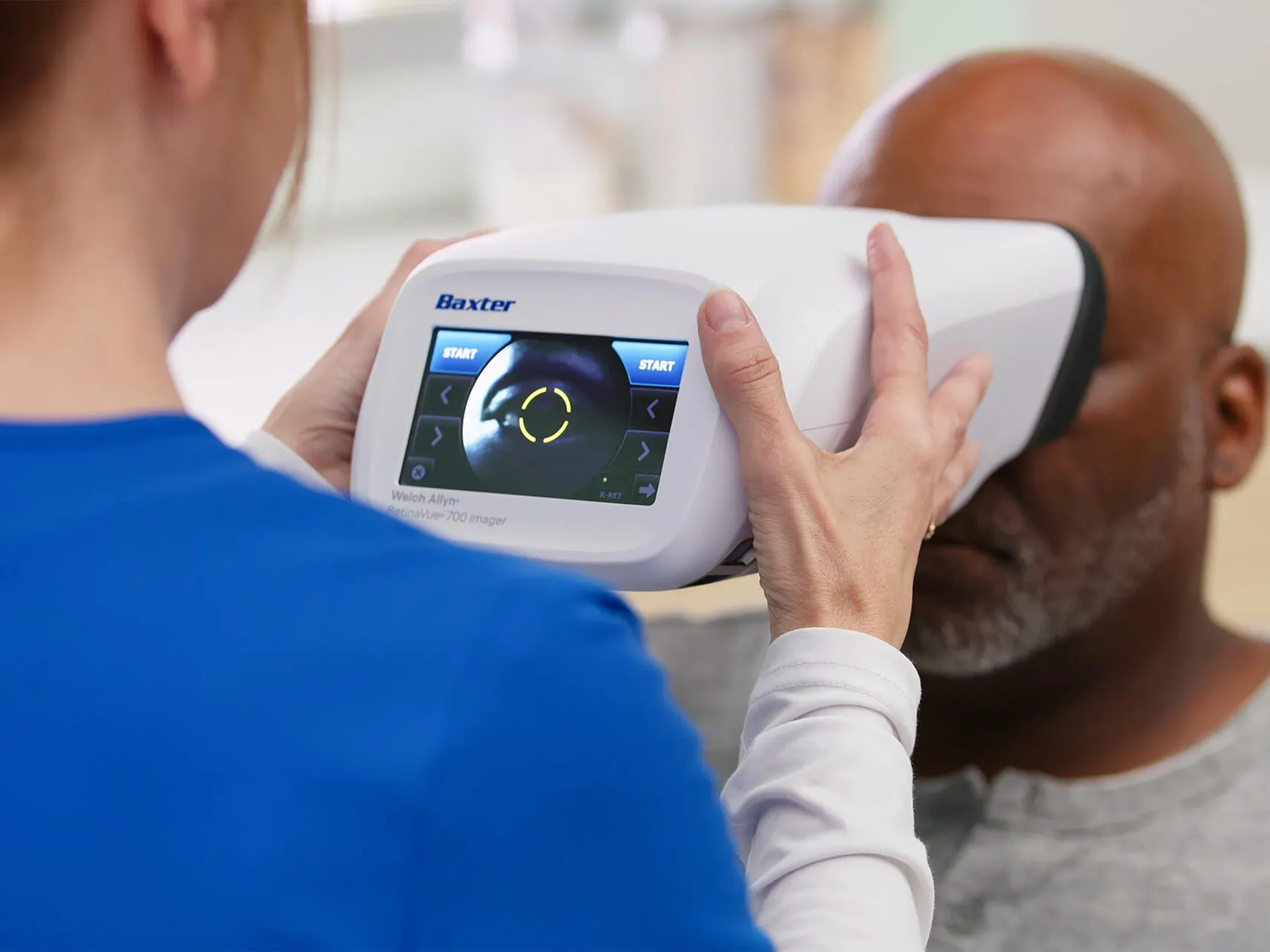
Discover how the RetinaVue care delivery model is making diabetic retinal eye exams simple and affordable for primary care providers, helping you:
- Intercept patients during primary care office visits, helping to achieve up to 90% documented compliance within one year2
- Inform care planning, delivery, coverage and quality measure (HEDIS) performance with accurate documentation3
- Improve financial outcomes with reimbursable retinal exams3,7 and improved quality measure performance

Help Improve HEDIS, STAR Ratings and HCC Risk Factors by Closing Care Gaps
Intercepting patients during routine primary care office visits with a teleretinal program like the RetinaVue care delivery model can help providers achieve up to 90% documented compliance with diabetic retinal exams in just 12 months.2
That helps close care gaps and more importantly, provides the opportunity to preserve the vision of more patients with RetinaVue. Learn more in our eBook, The Solution is in Sight: The Complete Guide to a Successful Teleretinal Program.
Pediatric Vision Screening
Vision disability is the single most prevalent disabling condition among children.4 The AAP recommends instrument-based vision screening as early as 12 months of age, if available.5 Yet 90% of pediatricians are not doing automated childhood vision screening.6

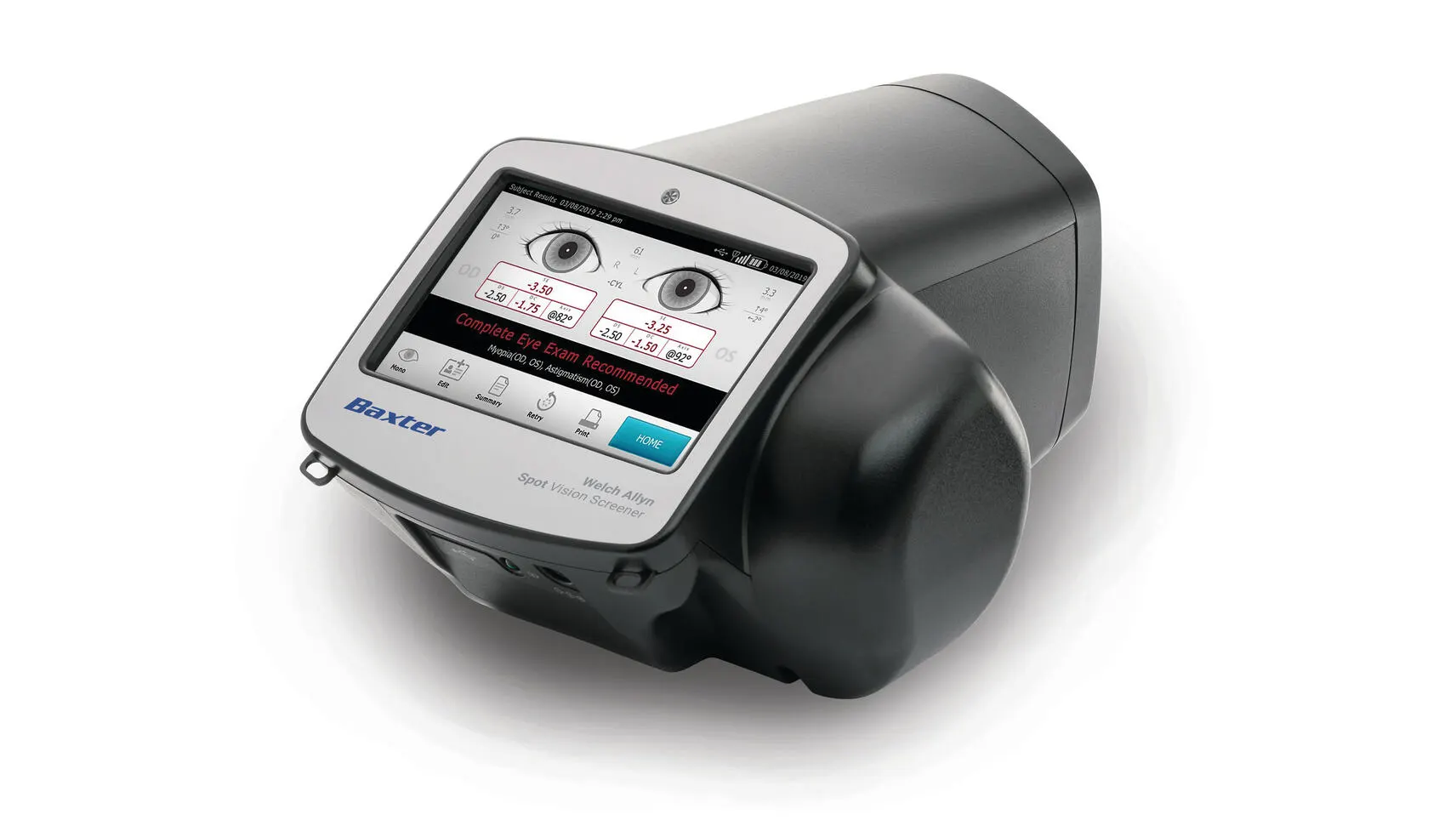
Get to know our Spot Vision Screener
See how our Spot Vision Screener can help you quickly and easily detect vision disorders in children — helping to improve sight and prevent blindness.
- Efficiently captures an image of both eyes within seconds
- Standardize on a fast, objective and consistent approach to pediatric vision screening across your healthcare network
Featured Retinal Exam and Vision Screening Resources

Pediatric Vision Screening: Important FAQs
Key Facts About Diabetic Retinopathy for Your Patients and Staff
References
- Diabetic Retinopathy Preferred Practice Pattern from the American Academy of Ophthalmology, http://dx.doi.org/10.1016/j.ophtha.2019.09.025 ISSN 0161-6420/19. Accessed July 29, 2020
- Mansberger SL, Gleitsmann K, Gardiner S, et al. Comparing the effectiveness of telemedicine and traditional surveillance in providing diabetic retinopathy screening examinations: A randomized controlled trial. Telemed J E Health. 2013 Dec; 19(12): 942-8
- HorizonBlue. Risk Adjustment Documentation & Coding Improvement Reference Information. https://www.horizonblue.com/providers/products-programs/risk-adjustment-overview/risk-adjustment-documentation-coding-improvement-reference-information#:~:text=Accurate%20and%20comprehensive%20reporting%20of,diagnoses%20per%20outpatient/provider%20claim. Accessed February 24, 2026.
- Centers for Disease Control and Prevention: Improving the Nations’ Vision Health: A Comprehensive Public Health Approach. http://www.cdc.gov/visionhealth/pdf/improving_nations_vision_health.pdf
- Visual System Assessment in Infants, Children, and Young Adults by Pediatricians. American Academy of Pediatrics. Pediatrics (2016) 137 (1): e20153596.
- Couser, Natario L., Esmail, Fatema Q., Hutchinson, Amy K. “Vision Screening in the Pediatricians Office” Open Journal of Ophthalmology (May 2012)
- CPT Professional 2021 codebook. tps://www.cms.gov/medicare/physician-fee-schedule/search?Y=0&T=4&HT=0&CT=0&H1=92228&M=5 Accessed September 9, 2022.
Disclaimers
Rx Only. For safe and proper use of product mentioned herein, please refer to the Instructions for Use or Operator Manual.
Welch Allyn Spot Vision Screener is not a prescriptive device.
Baxter, RetinaVue, Spot and Welch Allyn are trademarks of Baxter International Inc. or its subsidiaries.
HEDIS is a trademark of the National Committee for Quality Assurance.
Any other trademarks, product names or brand images are the property of their respective owners.