

Patient profiles are changing; increasing the risk of bleeding complications.1
15%
of US adults have chronic kidney disease.2
30%
of the US population use low-dose aspirin for cardiovascular disease prevention.3
~2/3
of surgical patients are treated with anticoagulants and/or antiplatelets.4
*Based on Premier Database data
~1 in 50
adults have liver disease.5
~2 in 5
adults will be diagnosed with cancer in their lifetime.6
Patients at the core.
Each patient is unique, with their own set of factors that impact their risk of bleeding related complications.
Some patients have an intact coagulation and relatively good health while others have compromised coagulation and existing comorbidities.
These factors can all influence the risk of bleeding7 and the performance of adjunctive hemostats agents and sealants.1

Choosing the right hemostatic product for your patient could lead to improved surgical outcomes and lower hospital costs.1


Passive hemostatic agents are effective in patients with intact coagulation.1
Active hemostatic agents are effective in patients with compromised and intact coagulation.1
Where do Passive and Active hemostatic agents fit into the coagulation cascade?8
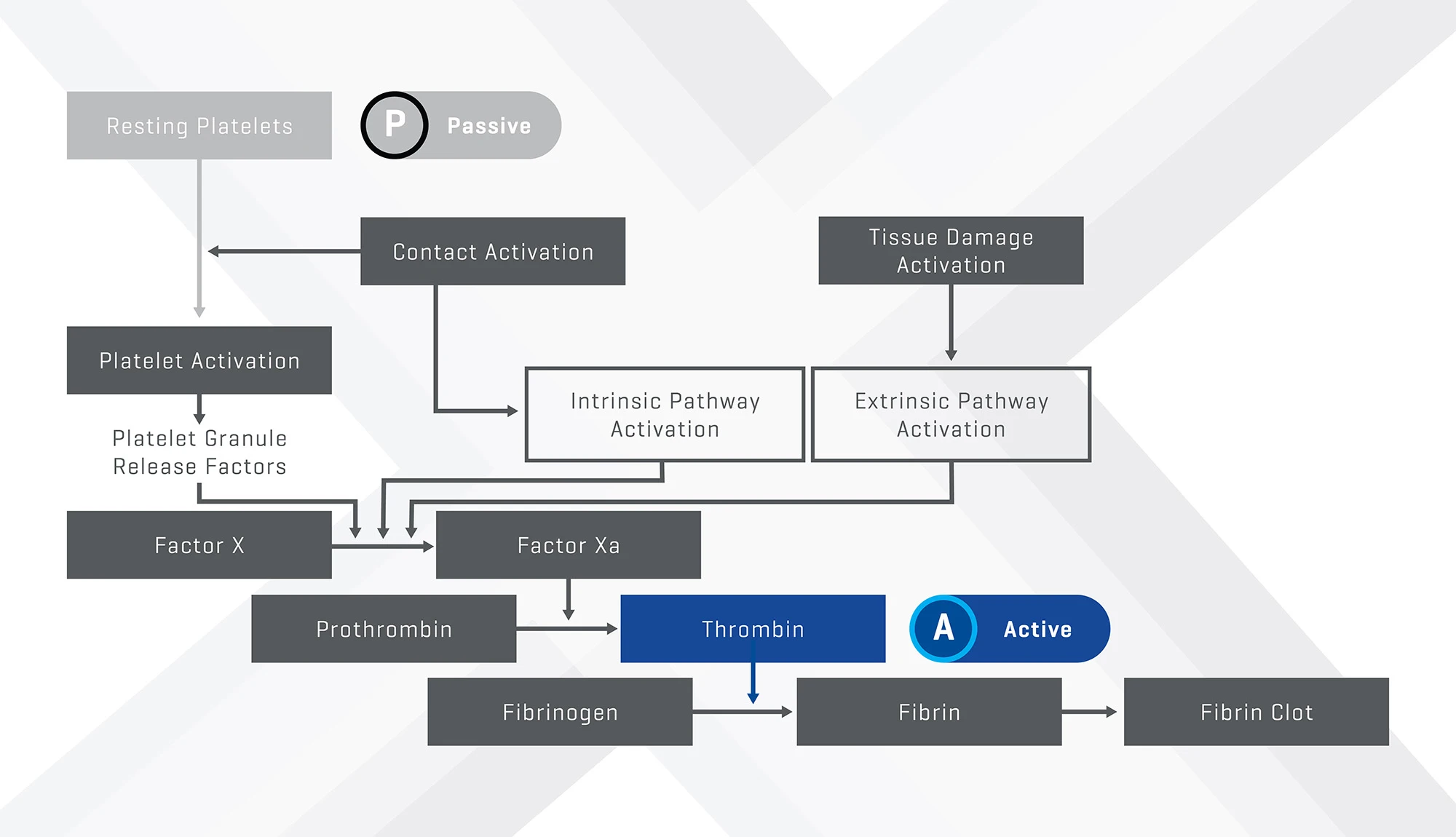
The United States Food and Drug Administration (FDA) now requires the use of a validated bleeding severity scale in clinical studies investigating hemostatic agents.9
The use of a validated bleeding scale could ultimately improve surgical efficiency by selecting the right adjunctive hemostatic agent for the right bleed. Choosing the appropriate adjunctive hemostatic agent may lead to:
- Improved patient outcomes1,10
- Fewer blood transfusions1,10
- Reduced hospital costs1,10
- Reduced length of hospital stay1,10,11

Click the plus signs, below, to view videos of each grade of bleed.
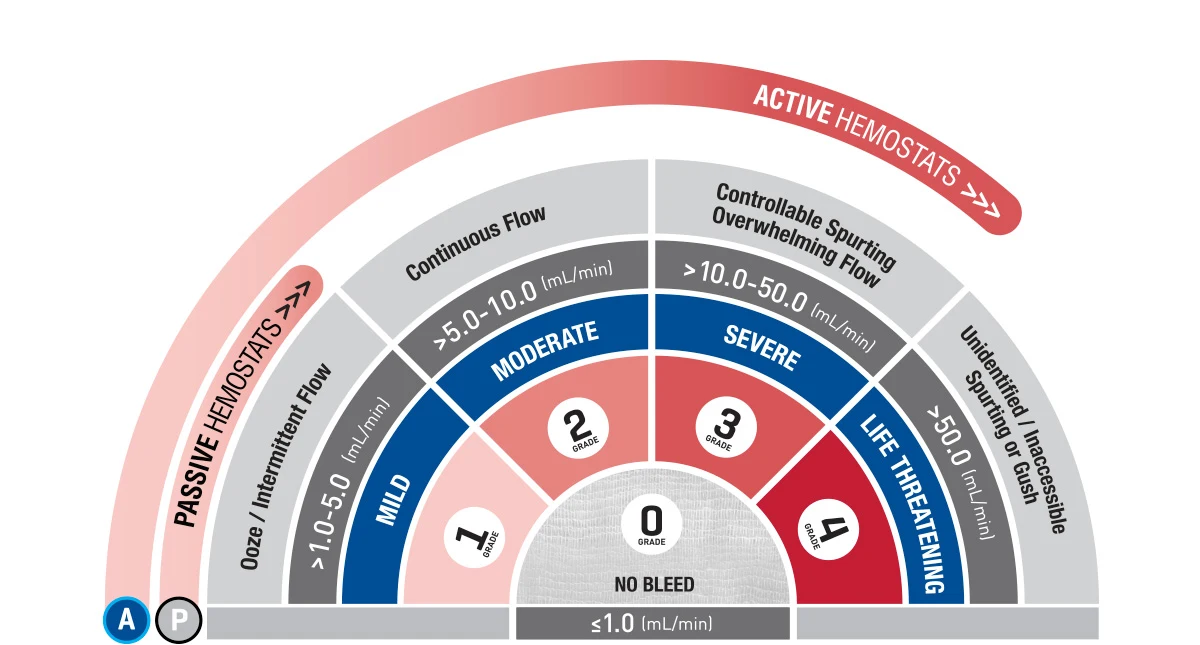
Grade 0: No Bleeding
- Superficial Nephric Abrasion
Grade 1: Mild
- Superficial Hepatic Abrasion
Grade 2: Moderate
- Superficial Cardiac Laceration
Grade 3: Severe
- Partial Hepatectomy
Grade 4: Life Threatening
- Supra-Renal Abdominal Aortotomy
Considering your patients profile, while critical, is only part of an effective hemostasis strategy.
Proactive decision-making around patient blood management with patients at the core
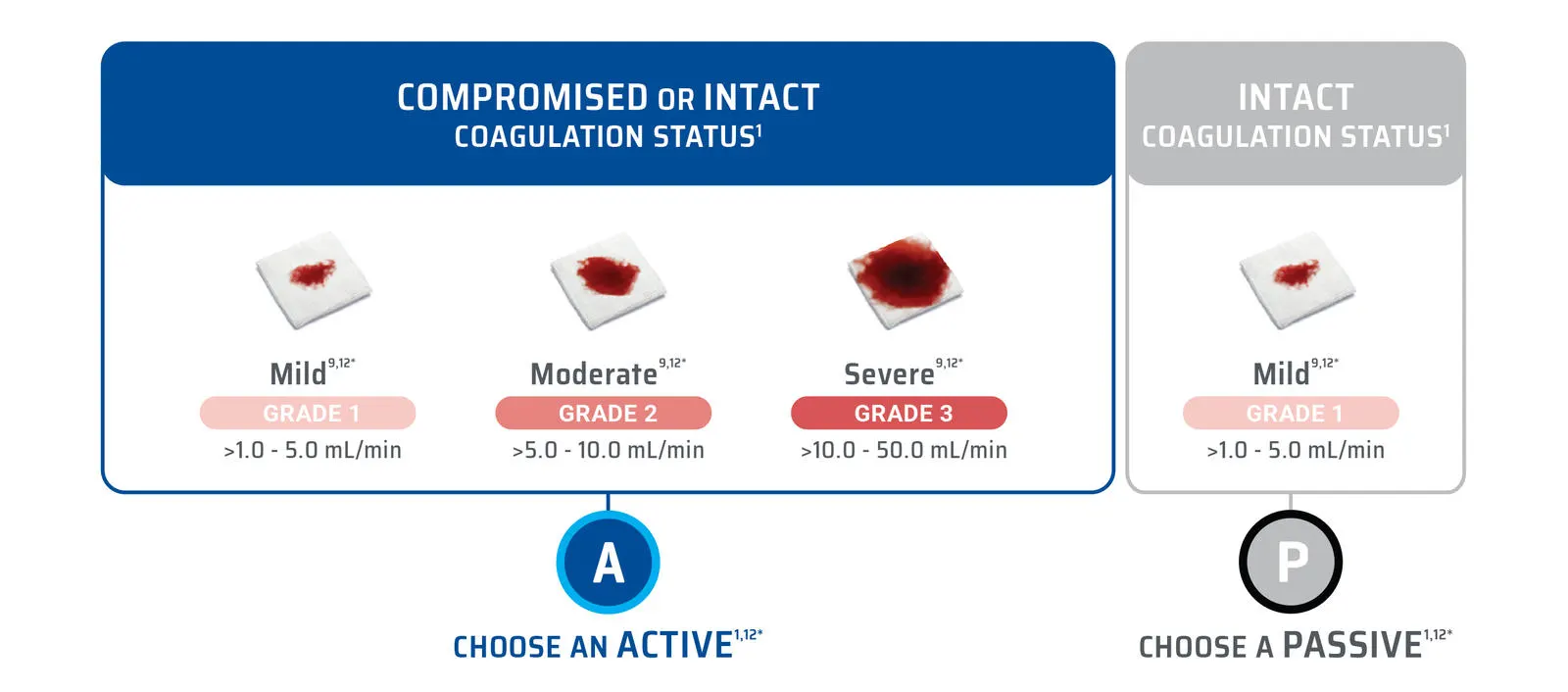
*In two porcine preclinical studies, certain active hemostats effectively controlled a broader range of intraoperative bleeds from Grade 1 (mild) up to Grade 3 (severe) as compared to passive agents. Results may not correlate to performance in humans. Please consult your product specific IFU or PI/SmPC for indications and additional information.
As with all novel developments in medicine, adoption of new processes take time to become mainstream. Just as patient blood management has taken years to be accepted and is now the standard of care, so will the VIBe SCALE Tool follow as a way to characterize surgical bleeding.
Dr. Pierre Tibi, MD, FACS
Contact Us To Learn More
References
1. Iannitti DA, Kim C, Ito D, et al. Impact of an active hemostatic product treatment approach on bleeding-related complications and hospital costs among inpatient surgeries in the United States. J Med Econ. 2021;24(1):514-523.
2. Centers for Disease Control and Prevention. Chronic Kidney Disease is Higher in Older Adults. https://nccd.cdc.gov/CKD/AreYouAware.aspx?emailDate=September_2020#refreshPosition.
3. Stuntz M, Bernstein B. Recent trends in the prevalence of low-dose aspirin use for primary and secondary prevention of cardiovascular disease in the United States 2012-2015. Prev Med Rep. 2017;5:183-186.
4. Preliminary Results, Premier Data Summary_Report_2018Q1_2019Q2 (v1.0). Baxter [Data on File]. March 9, 2020. Study number 9.4.
5. Centers for Disease Control and Prevention. Chronic Liver Disease and Cirrhosis. https://www.cdc.gov/nchs/fastats/liver-disease.htm.
6. American Cancer Society Facts and Figures 2023. https://www.cancer.org/content/dam/cancer-org/research/cancer-facts-and-statistics/annual-cancer-facts-and-figures/2023/2023-cancer-facts-and-figures.pdf.
7. Johnston SS, Jamouse N, Mistry S, et al. Association of in-hospital surgical bleeding events with prolonged hospital length of stay, days spent in critical care, complications, and mortality: a retrospective cohort study among patients undergoing neoplasm-directed surgeries in English hospitals. Clinicoecon Outcomes Res. 2021;13:19-29.
8. Oz MC, Rondinone JF, Shargill NS. Floseal Matrix: new generation topical hemostatic sealant. J Card Surg. 2003;18:486-493.
9. Lewis KM, Li Q, Jones DS, et al. Development and validation of an intraoperative bleeding severity scale for use in clinical studies of hemostatic agents. Surgery. 2017;161(3):771-781.
10. Nasso G, Piancone F, Bonifazi R, et al. Prospective randomized clinical trial of Floseal Matrix Sealant in cardiac surgery. Ann Thorac Surg. 2009;88:1520-1526.
11. Ramirez MG, Deutsch H, Khanna N, et al. Floseal only versus in combination in spine surgery: a comparative, retrospective hospital database evaluation of clinical and healthcare resource outcomes. Hosp Pract (1995). 2018;46:189-196
12. Efficacy and Safety of Active Hemostatic Agents at Specific Bleeding Grades as Determined by the Validated Intraoperative Bleeding Scale (VIBe Scale) in Heparinized Porcine Bleeding Models. Baxter [Data on File]. Study number BWQ026-IS17/BWQ027-IS17.